The first virtual airline flight is a milestone. It is also where most newcomers make the same avoidable mistake: they fire up the heaviest, most complex aircraft they own, file a transatlantic, and burn out somewhere over Greenland. The aircraft you choose first should match your current ability, not the ability you hope to acquire. Here is how to think about it.
Three honest questions
Before you scroll through liveries, answer these:
- How long can you stay focused? If a movie loses you after 90 minutes, a 12-hour transatlantic will not work.
- How well do you know your sim's avionics stack? A glass-cockpit airliner without any FMS knowledge is going to be a long evening.
- How patient are you with starting procedures? A cold-and-dark 737 takes 25 minutes to get to taxi-ready if you're new. Some people enjoy that; others want to be airborne in five.
Answer those before choosing, and the aircraft list shrinks dramatically.
Short-haul narrowbody: the right first choice for most people
A 737 or A320, on a 60–120-minute leg, is almost always the right first virtual airline flight. Here is why:
- Total flight time fits a single sitting.
- You'll experience every flight phase, departure, climb, cruise, descent, approach, landing, without the cruise phase becoming the dominant chunk.
- The avionics are documented in countless tutorials.
- Most virtual airlines have plenty of short-haul routes available, so you have variety.
- If something goes wrong, divert options are everywhere.
You learn faster from ten short flights than from one long-haul, because you encounter ten landings instead of one.
Why widebodies trip people up
The 777, 787, A330 and A350 are beautiful, satisfying aircraft. They also assume you already know how an FMS works. The cruise phase is two-thirds of the flight. The energy management during descent is more demanding than a narrowbody. The PIREP scoring picks up on small inefficiencies that you would absorb on a short-haul leg. A first flight in a long-haul widebody, with no prior airliner experience, is almost guaranteed to end somewhere between "exhausting" and "frustrating".
That doesn't mean don't fly them. It means earn them. Twenty short-haul flights later, your widebody flight will feel rewarding instead of overwhelming.
Avoid the "best aircraft I own" trap
If you bought the premium A350 study-level add-on, there is enormous temptation to make it your first VA flight. Don't. The complexity of a study-level FMS is independent of the complexity of the flight itself, and stacking both at once is a recipe for giving up.
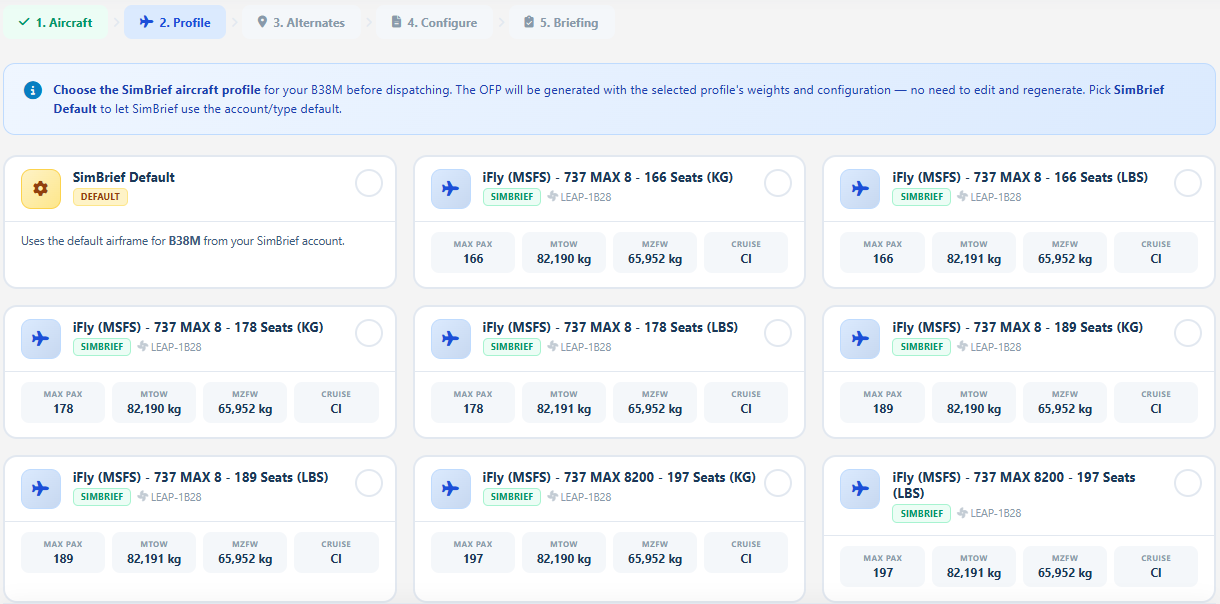
Better to use a default 737 for the first week and switch up only once you've internalised the operational rhythm: SimBrief plan, route entry, departure briefing, takeoff, climb to cruise, top-of-descent calculation, STAR, ILS or RNAV approach, landing, parking, PIREP.
What about turboprops?
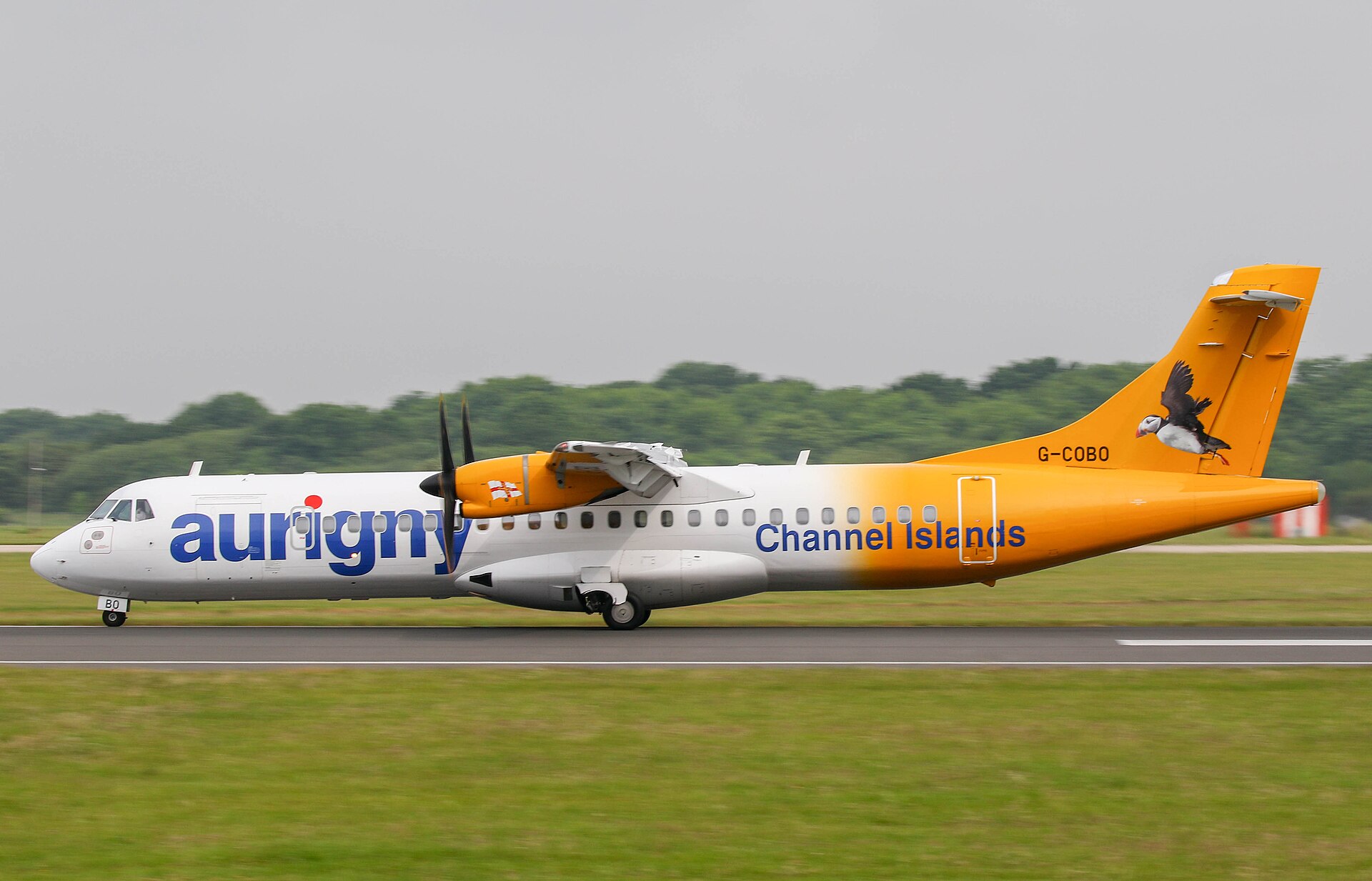
An underrated answer. A Dash 8 Q400 or ATR 72 is forgiving, low and slow, and lands by hand without much drama. If your airline has regional routes, a turboprop flight can be a delightful first experience, calmer than a jet, more visual, and short. Many pilots return to turboprops permanently after starting there.
Matching aircraft to route
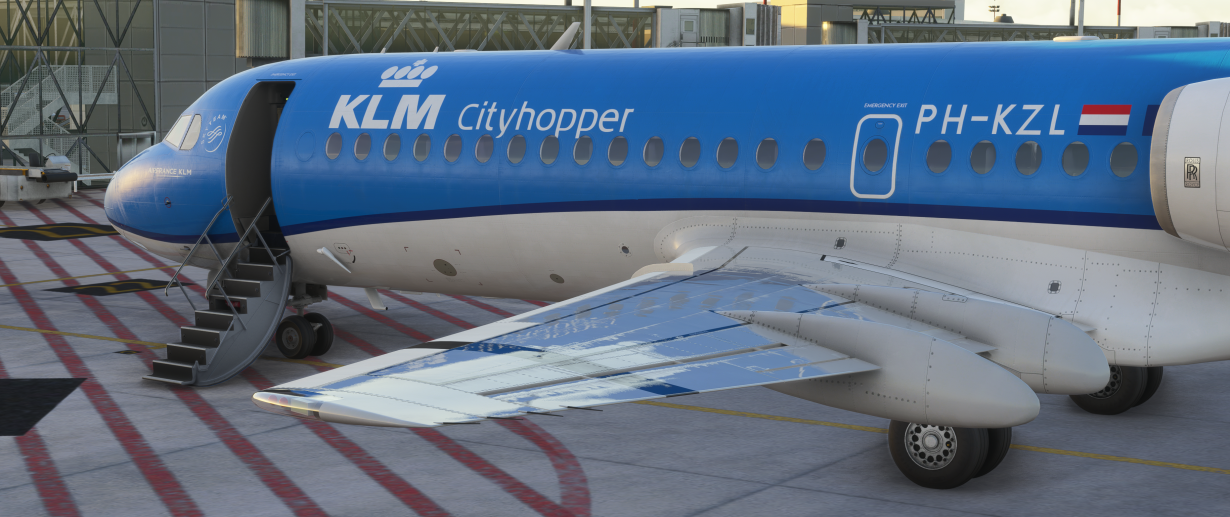
Pick the route first, then the aircraft. If you've decided your first flight will be EHAM-EGLL (a real Transavia/KLM hop), that's a 50-minute leg. A widebody on that leg is pointless and operationally wrong. A narrowbody or even a turboprop fits the route. Letting the route guide the aircraft is also how real airlines work.
Default aircraft are completely fine
You do not need a paid add-on to start. MSFS's default A320neo or the in-built 787 are perfectly usable for a first VA flight. Once you have your operational habits down, upgrading to a higher-fidelity aircraft is a far more rewarding experience because you'll notice and appreciate the differences. Skipping straight to study-level means you spend the first weeks fighting software, not flying.
A pragmatic shortlist
- Pure beginner: Default 737-700 or A320neo, 60-90 minute route.
- Some sim time, no airliner experience: Same, but a 90-120 minute route with one or two waypoints requiring step-climb planning.
- Comfortable with FMS basics: A 320 family payware add-on (Fenix, FBW Premium) on a 2-hour leg.
- Looking for a different rhythm: Dash 8 Q400 or ATR 72 on a 45-minute regional sector.
- After 10+ short-hauls and confident: 787 or 777 on a sub-6-hour route as a stepping stone to longer flights.
The honest truth
The aircraft matters less than the route, and the route matters less than your attention budget. Pick conservatively, finish the flight, file the PIREP, and you'll already know what you want for flight two. Pick aspirationally, give up at cruise, and you'll wonder why you bothered. Virtual airlines reward repetition, and you can only repeat a flight if you finished the first one.